12 Things I Wish Someone Had Told Me Sooner About Relational Trauma

There are a few things I wish someone had told me years ago.
Not because they would have made the pain disappear overnight. (They wouldn't have.)
But they would have helped me stop asking, "What's wrong with me?" and start asking more helpful questions.
Relational trauma has a way of changing how we see ourselves, other people, and the world around us. Many of the patterns we carry into adulthood began as creative ways of staying connected, staying safe, or making sense of experiences we couldn't control.
These are the truths I wish someone had shared with me sooner.
1. Relationships shape how we see ourselves.
We don't discover who we are in isolation.
Our earliest relationships quietly teach us what to expect from love, conflict, safety, closeness, and even ourselves. Over time, those experiences become the lens through which we interpret the world, ourselves, and other people.
The good news is that awareness opens up the opportunity to choose a different lens. (That’s why I always say awareness is great, but it’s often only step 1.)
2. Your nervous system is trying to protect you.
When you find yourself overthinking, shutting down, staying busy, or scanning every room for tension, your nervous system isn't trying to make your life difficult!
It's trying to keep you safe based on what it has learned, and it’s often doing a really good job.
Understanding that changes the conversation from self criticism to curiosity.
3. Hypervigilance isn't intuition.
This one changed everything for me.
Intuition is usually calm, steady, and grounded. Sometimes it even feels like uncertainty, but tinged with excitement or being able to take a deeper breath.
Hypervigilance feels urgent. It searches for danger. It wants certainty before you'll let yourself relax.
Learning to recognize the difference over time starts to create space to trust yourself again.
4. People pleasing is often a strategy, not a personality.
Many people learned that keeping other people happy reduced conflict or preserved connection.
Over time, that strategy can start to feel like who you are. “I’m the go-with-the-flow friend.”
Spoiler alert: you might not be.
People pleasing is probably something you learned, which means it's something you can gently outgrow, if you want.
5. You can outgrow adaptations without criticizing the version of you that needed them.
The goal isn't to look back with embarrassment.
The goal is to appreciate that those strategies helped you survive a season of your life.
You can thank them for what they did while choosing something different moving forward.
6. Understanding yourself creates choices.
We rarely change through shame. And if we do, it often feels forced or reinforces the shame cycle.
We deeply change when we begin to understand the patterns we've been living from.
Insight creates options.
Options create freedom.
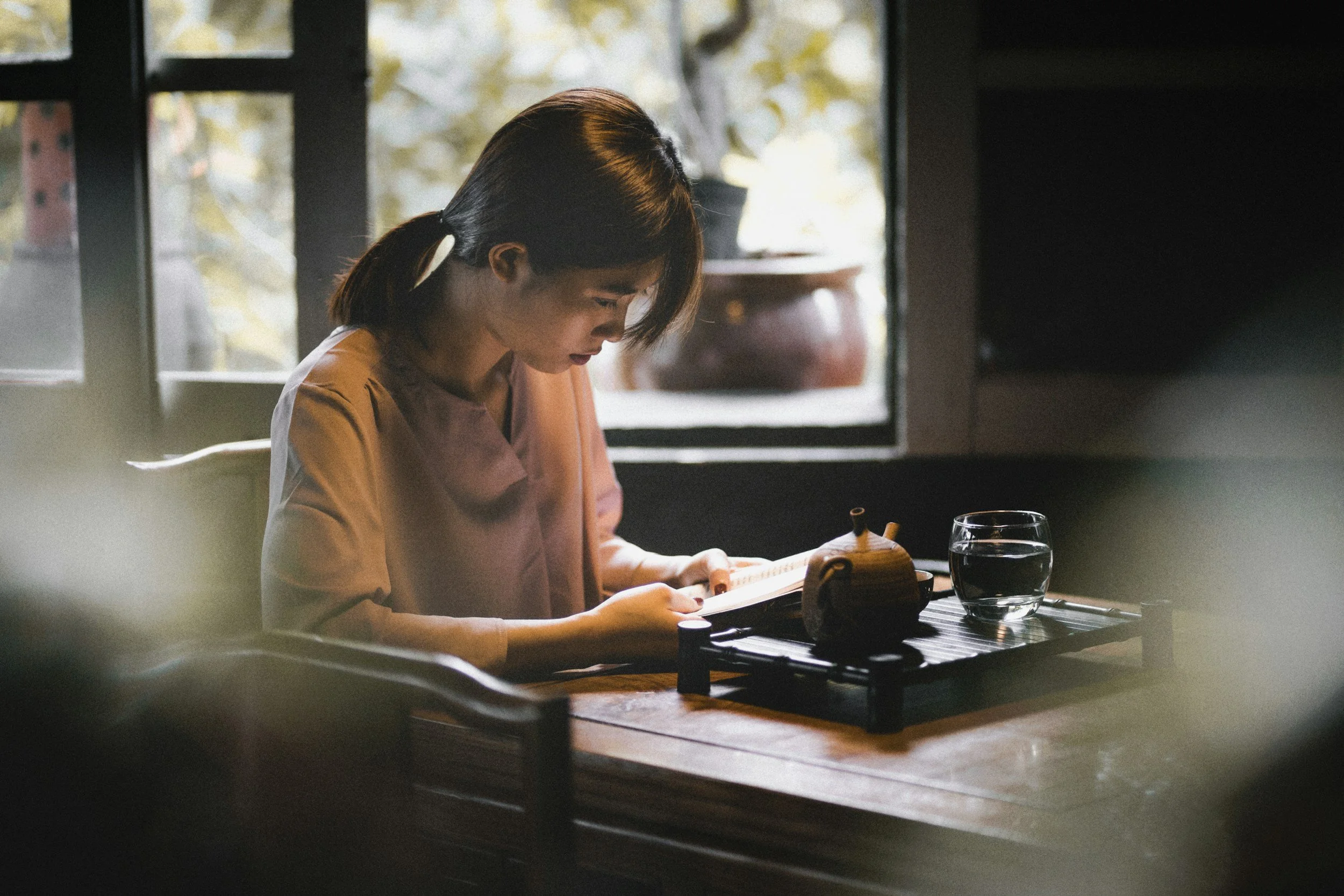
7. Peace usually arrives quietly.
Many of us become so accustomed to urgency that calm can feel unfamiliar.
Peace doesn't always announce itself.
Sometimes it looks like a body that finally exhales.
Sometimes it looks like saying no without explaining yourself.
Sometimes it looks like choosing rest over proving your worth.
Sometimes it feels scarier than the chaos we were used to. That’s the moment you might have to remind yourself not to turn back.
8. You don't have to explain every boundary.
A boundary isn't a courtroom argument.
And it isn't a request for permission.
It's simply a way of honoring what allows you to live with greater integrity, peace, and self respect.
It’s okay to state a boundary without explaining why. But if explanations are where you’re currently at, that’s okay, too.
Practice makes progress.
9. Sometimes clarity comes before confidence.
We often wait until we feel completely certain before making a change, or we get tons of outside opinions so we feel more confident.
Life doesn't always work that way.
Sometimes you know intuitively what's healthy long before you feel brave enough to choose it.
That's okay.
Confidence often grows after the decision.
10. Healing isn't becoming someone new.
One of the biggest misconceptions about healing is that you're supposed to become an entirely different person.
I have come to realize that's not entirely true.
I think healing is remembering who you are beneath the survival strategies you've carried for so long, and stepping into who you decide you want to be, based on your authentic feelings and values.
11. Not everyone will understand your decisions.
As you grow, some people will celebrate you.
Others won't.
Your healing doesn't require unanimous approval.
It asks for honesty with yourself.
12. You are allowed to come home to yourself.
If you've spent years adapting to other people's expectations, emotions, or unpredictability, returning to yourself can feel unfamiliar.
Go slowly.
Get curious.
Practice listening to your own voice again.
Coming home to yourself isn't one dramatic moment.
It's a series of small choices that gradually reconnect you with the person you've always been.
A Final Thought
If there's one thing I hope you take away from this, it's this:
The patterns you've developed make sense in the context of what you've lived through.
They deserve understanding.
And understanding is often where real change begins.
If conversations like this resonate with you, I'd love to invite you to keep exploring with me on The Reclamation Room podcast, where we talk about relationships, healing, boundaries, and remembering who we are beneath survival.

Ready to Go Deeper?
Everything I write, teach, and talk about points back to one idea:
The relationship you have with yourself matters.
Journey to Self is where we get to explore that together.
Journey to Self is my 12-week nervous system and self-trust coaching program for women ready to understand their patterns, respond to themselves differently, and build more trust in their own voice.
If you're ready to keep going, I'd love to walk with you.
Learn more about Journey to Self →
Wherever you are on your journey, I hope you keep finding your way home.
With love,
Ashana