The Problem With Calling Little Girls “Mature”
The women everyone relies on are often falling apart quietly.

People called me mature for years.
What they didn’t see was that I was taught to emotionally abandon myself to keep the world comfortable.
When people called me mature, they weren’t seeing my internal processing. They didn’t know how I was handling things, or perceiving them, or storing them away for future use. They saw me getting things done, and they saw me doing them pretty well. Correctly. Efficiently.
But they didn’t see me internalizing the belief that things had to go smoothly or be perfect in order for the world to keep turning.
They didn’t feel my heart racing constantly, or notice that every night when I washed my face or brushed my teeth, I still felt like I was racing the clock.
Evenings felt like another chore to get through, before I had to wake up and do it all over again the next day. Even when I laid down, my back hurt so bad it took my breath away. It took several minutes to relax my body enough to fall asleep.
There was no wind down, no sacred routine. There was just surviving, from the moment I became conscious to the moment I slipped into unsettled dreams.
When being “mature” becomes a survival strategy
Racing the clock meant that I was always trying to get to the next task. Nothing was ever done well enough for me to take a step back and see a job well done. I just had to keep moving so that the world didn’t get away from me.
As a child, I wasn’t often allowed to just sit and rest. My dad would ask, “Did you get your chores done?” and then he would check them, criticizing as he went. There was always more I could do. More ways I could be better.
So I learned to play outside and make myself scarce.
Being “mature” cost me the ability to face life with wonder and awe. I instead learned to view each situation as a problem to tackle. There was nothing mysterious about the world except the solution I had to find. Everything fit into neat boxes of black and white, leaving little room for shades of grey.
I became rigid, much like the people in my past who had hurt me so badly. The exact thing I rebelled against.
The little girl who becomes the woman everyone relies on
Being mature also cost me the ability to be held and nurtured. When you become the woman who can handle anything, you start to project into the world that you don’t need anything… or anyone. And when you form that personality as a child, it’s really easy to get left behind.
People always know you’re the one they can turn to, but no one really looks back to check on you, to make sure you’re okay too.
(The people who did look back- those were precious people. A lot of times, those moments kept me going.)
I always hung out with older kids and adults, so I got exposed to things I probably shouldn’t have. But secretly, I longed to do the same things my peers were doing. I had become such a “chores before play” kind of person that my personality slowly fit more with people older than me.
I became hyper vigilant of the world because I constantly had to scan for the next danger or the next problem to solve. All the while, I looked around and noticed people being happy and confident, and I wondered what they had that I didn’t.
They looked loved.
They looked well taken care of. They looked unbothered, washed, ironed, made up, and happy. They looked like the world wasn’t a series of mishaps waiting to attack them. They seemed to deserve happiness far more than I did, because obviously that’s what they were receiving.
I felt difficult to love because my experience with love often felt extreme. Either people sang my praises and felt grateful for all I did for them, or criticism appeared the moment I showed weakness or imperfection.
At least, that’s how it felt to me.
If I kept providing, they kept loving me.
While I was being mature and competent, I was quietly carrying the belief that no one could handle things as well as me.
So I had to be the mature one. If I didn’t do it, nothing would get done.
And because of that, I called in relationships that mirrored the same dynamic. Partnerships where I ended up mothering, placating, and taking on more than my share of the emotional labor.
At the same time, I was locked away inside a tomb of self-defeat. No one could really reach me.
And that hurt my heart.
I wanted to be easy to love, like everyone else.
When being useful starts to feel like being lovable
Most of the praise I received from adults was for my composure, my ability to perform, my willingness to help them and make their lives easier instead of harder. So I learned not to do the things that seemed to make life harder for other people.
I learned not to be messy with my creativity. I stopped having much creativity at all outside of writing.
I learned not to be loud with my emotions or burdensome with my problems.
I learned not to make myself too visible in the house and to take up as little space as possible.
What happens when you forget how to play
As a child, I loved writing stories and reading books. I loved imaginary worlds. I loved role-playing games, creating songs, nature, clouds, animals, and bugs.
But I became so busy trying to be perfect and mature that I no longer had time for those things.
Even the books I read became darker and darker until eventually I stopped reading fiction altogether. If I read, it was self-help books. I turned myself into one long self-improvement project.
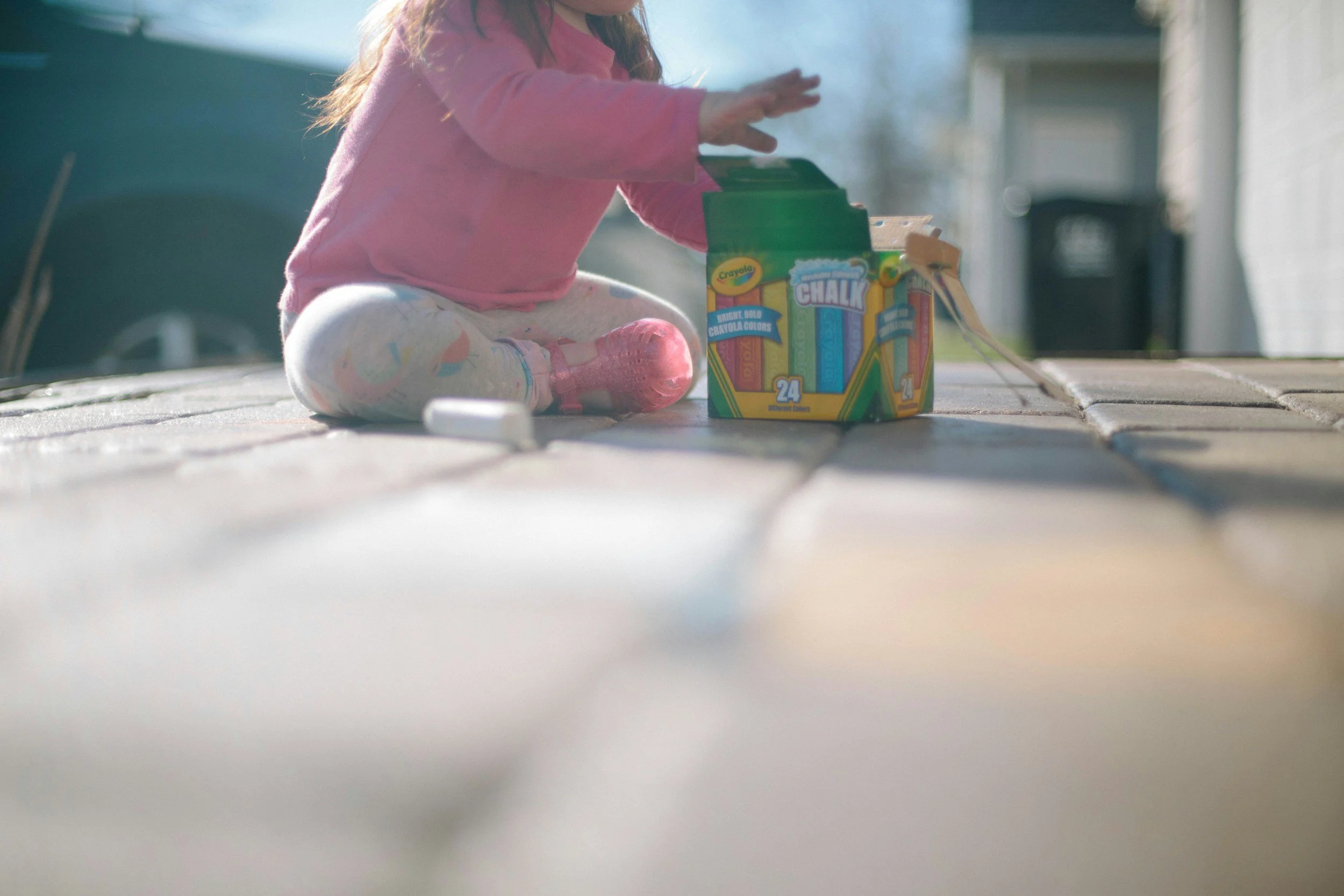
I stopped knowing how to play.
When my children would ask me to play with them, my chest would grow tight. My body suddenly felt restricted and uncomfortable, almost like I was being strangled. I didn’t understand it then, but now I do.
My nervous system had forgotten that life was allowed to feel open, creative, or free.
When I was wandering around not knowing how to function, I became susceptible to fads and shiny things. Pinterest versions of selfhood. Decorating my home. Paleo and keto dieting. Weight lifting. Bible journaling. Being a trophy wife.
I tried each one on and genuinely enjoyed parts of the process.
But eventually it turned into self-help books upon self-help books: how to regulate better, how to be a calm parent, how to be a better wife.
Those things were all more projects. Like patching windows and fixing hinges on a house that was already condemned underneath.
Because the self beneath all of it still didn’t feel worthy of happiness.
I would over-caffeinate to keep up with life, function at high speed and high capacity, and then emotionally collapse after conflict or disconnection in my relationships. I had decision anxiety so badly that I would leave full carts of groceries in stores and drive home.
From the outside, I probably looked unstable, difficult to understand, or hard to get close to.
But underneath it all, I was exhausted from constantly managing myself.
When usefulness becomes an identity
I kept playing the dutiful role: caretaker, therapist, errand runner, host.
Because I believed that if I stopped being useful, people wouldn’t want me around anymore.
And eventually, my personality became drinking.
Not because I wanted destruction, but because it was one of the only times I stopped performing.
When I stopped drinking, I realized the get-togethers weren’t actually fulfilling me anymore. We were repeating the same stories, living the same routines, trying to convince ourselves we were still alive inside them.
That was when I realized I was going to crash and burn if I didn’t figure out what the real problem was.
Because the problem was never going to be solved by becoming more perfect.
It led to a life of extremes: perfection and burnout, or perfection and partying to blow off steam.
When overfunctioning follows you into relationships
And once I stopped hosting, once I stopped constantly offering myself up as the glue holding everything together, I started noticing the distance in my relationships.
The conversations became more tense. The invitations slowed down.
But then I realized something even harder:
I wasn’t reaching out deeply either.
Most of my relationships struggled to move beyond the surface because I didn’t feel safe letting people truly know me. I was always helping, offering solutions, managing discomfort. What I thought was care probably felt like judgment sometimes.
The hardest truth to admit was that I didn’t feel safe letting anyone in because I believed any moment of imperfection might become the moment someone stopped loving me.
And eventually, I had to confront another painful realization:
I also viewed other people through the lens of usefulness.
If they could not provide something emotionally, intellectually, or practically, my respect for them quietly lowered and I kept them at a greater distance.
I think we often don’t realize how much of our personalities are shaped by our upbringing, and how much of that can actually soften or fade when we finally address the unmet needs underneath them.
What happens when you stop performing
Healing did not feel peaceful at first.
It felt awful.
It felt like wandering around my house picking things up and putting them back down because I didn’t know what to do with myself anymore. It felt like sitting in unbearable shame and embarrassment without trying to outrun it through performance.
I was angry a lot.
I cried until I thought I couldn’t cry anymore.
I had to learn how to love myself enough that I no longer needed to constantly earn love from other people.
And that felt lonely.
But slowly, things started changing.
My chest now aches when I see something really sad or really beautiful. It surprises me every time, because before, I felt almost nothing. My chest was always too tight.
Walking in nature helped.
Hiking. Kayaking. Moving alongside something that exists unapologetically.
Nature doesn’t ask permission to exist beautifully.
It just does.
And maybe we can too.
Now, I feel most like myself during genuine moments of connection, whether with myself or with others. Music, art, movement, emotions: these are all things I can now stop and actually feel instead of avoiding or performing through.
When emotions come through, I know I’m doing something right.
Because I’m finally trusting myself enough to allow them.
Learning to take up space again
Now I let myself take time before answering difficult things. I sit with creative projects and music playing in the background. I cry when crying is what wants to come through.
I no longer rush to fill silences by offering more of myself.
I let people ask for help before I offer it.
I let myself change my mind.
And if I start spiraling over a decision, I remind myself that I can always return and choose differently later.
But maybe the biggest shift of all has been this:
I let people misunderstand me.
I no longer jump to explain myself or manage everyone’s perception of me.
I let situations exist without trying to control them.
A lot of high-functioning women are emotionally abandoning themselves all day long and calling it maturity because that’s what people called it when they made the world more comfortable for everyone else.
But we are here to take up space too.
You deserve to be comfortable too.
Maybe that’s why so many high-functioning women feel exhausted all the time.
Not because they’re weak.
Because they’ve spent years performing strength while quietly abandoning themselves underneath it.
So many women learned to survive by becoming useful, composed, and endlessly capable.
But eventually, survival starts to feel lonely.
Every Tuesday, I gather with women who are learning how to soften, reconnect with themselves, and stop carrying the world alone.
If that’s where you are too, you’re welcome to join us.
I’ve written more about what happens when capability becomes something you feel like you have to maintain in Maybe You Really Are Independent. But Did You Get to Choose It?.
With love,
—Ashana