Is a Trauma Bond an Addiction?
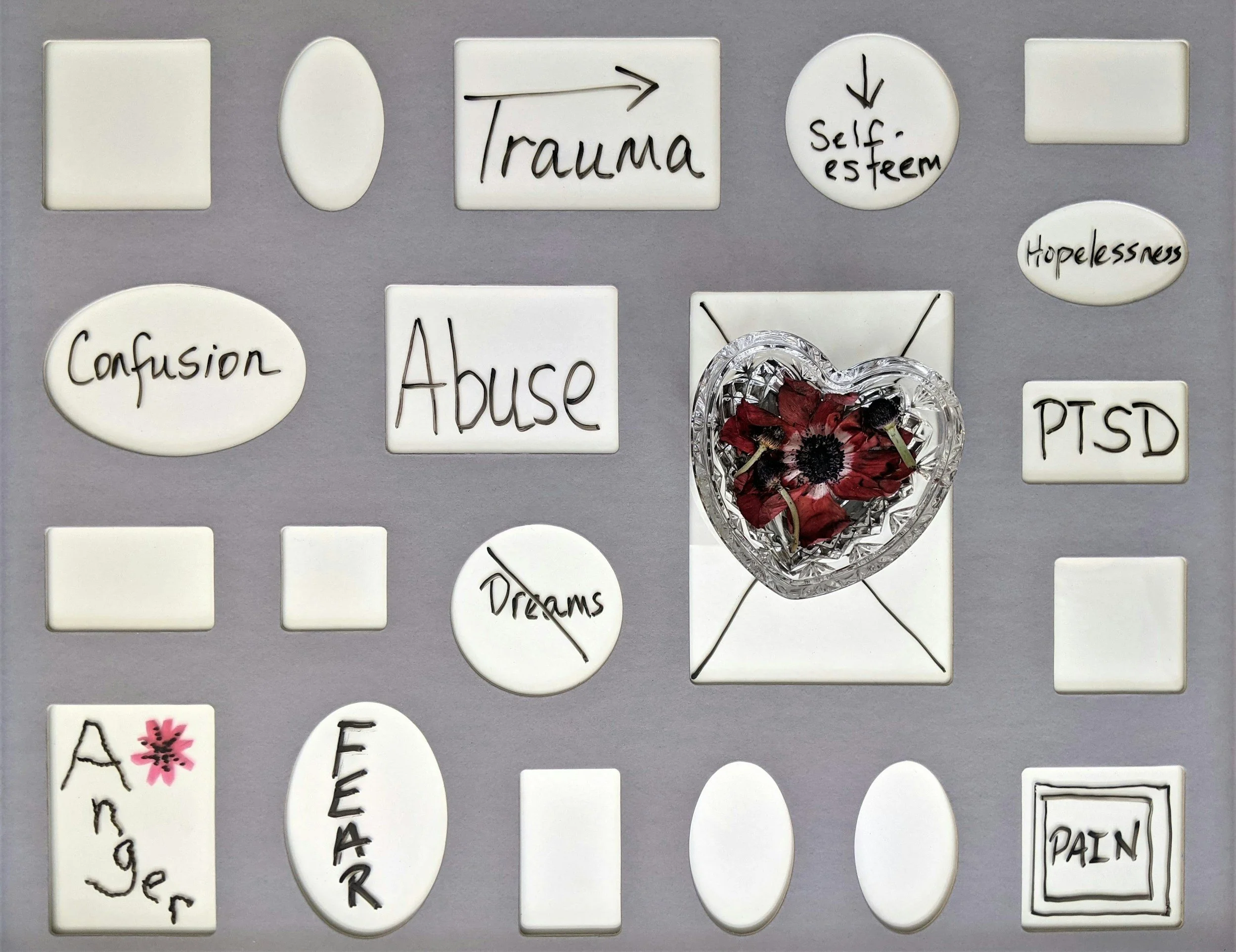
There’s a certain aspect of the trauma bond that doesn’t feel very “talked about.”
We hear about the fighting the most: “When it’s good, it’s good. But when it’s bad, it’s really bad.”.
We definitely go in circles contemplating the betrayal. (If you know, you know.)
Surprisingly, even the apology get decent air time: we often remember what they did to convince us to try again.
The part I’m talking about, the part that stays with us even when we don’t talk about it, is the waiting.
That stretch of time where your body feels like it’s leaning forward, bracing into something that hasn’t happened yet. Where your mind keeps checking for a text, a sign, a softening, a shift in the air, a word that signifies surrender. This is the time when part of you already knows this hurts (and tried like hell to avoid it), but another part of you still feels pulled into it.. like if you give it everythign you’ve got, it might finally bring relief this time. That frantic feeling becomes so familiar, yet it stings every time.
It’s important to know that learning, anticipation, attachment, and reward processes can all be part of why that pull feels so powerful.
Understanding that can change the way you hold yourself in this process, and in your healing after.
What Happens in the Brain During a Trauma Bond?
Deep in the middle of your brain is a pathway called the mesolimbic system. In simple terms, it’s the part of you that says:
This matters. Go toward this. Remember this. Try again.
People often call it the “pleasure system,” but that’s not completely right. It’s more like the anticipation system. The craving system. The maybe this time system.
Research on dopamine and reward learning has shown that dopamine activity is closely involved in learning from predicted and unexpected rewards, helping the brain update what it expects to happen next (Schultz et al., 1997).
In other words, dopamine isn't only about how pleasurable something feels. Anticipation, prediction, and learning what might happen next are part of the picture too.
And like we explored earlier, that’s exactly where the FELT sense of trauma bonds live.
Why Trauma Bonds Feel So Hard to Leave
A trauma bond isn’t built on steady love or consistent safety. It’s built on unpredictability.
Warmth, then cold. Connection, then distance. Hope, then loss.
Research has also found that dopamine neurons respond to information about both reward probability and uncertainty, which helps explain why unpredictable rewards can hold our attention so powerfully (Fiorillo et al., 2003).
When you never quite know what's coming next, the uncertainty itself can keep your attention locked onto what might happen.
This helps us understand why unpredictable rewards can be so compelling. The possibility of relief can keep pulling your attention forward even when the overall experience is painful.
Your brain keeps leaning in, thinking:
Maybe this time it will be different.
So when someone in your life becomes the source of both the pain and the relief, your system will often start to wire them in as the “answer,” even when they’re also the wound.
So if you find yourself feeling weak for repeating the same cycles.. Just know this process is actually your biology, doing its best to stay in tune with your nervous-system that learned how to survive.
The “Relief Hook”
Trauma bonds don’t usually form in calm seasons of life. They tend to form when you’re already overwhelmed, lonely, grieving, or trying to find solid ground inside yourself.
So when a person shows up and offers:
Intensity
Attention
Validation
Connection
A sense of being chosen
Your brain doesn’t just register them as a person.
It can register them as relief.
And once something becomes “the thing that makes this pain go away,” the mesolimbic system will keep pointing you back toward it, even when it starts to cost you. (This also explains a lot about certain patterns of codependency, but that’s another post in itself.)
Why Logic Isn’t Enough
This sense of relief that sinks its hooks into your nervous system is why so many people in trauma bonds say things like:
I know this isn’t good for me, but I still feel pulled.
Because the part of you that understands isn’t the same part of you that’s activated.
Knowing something logically doesn't automatically undo a learned reward-and-relief pattern.
So healing here isn’t as simple as “seeing the truth.”
It’s the steps that come after that: teaching your nervous system new places to find relief.
This is also why understanding the patterns you developed after relational trauma can create so much more compassion for yourself. I wrote more about those patterns in 12 Things I Wish Someone Had Told Me Sooner About Relational Trauma.
The Loop, Gently Named
Most trauma bonds follow a rhythm:
Tension or distance
Craving or longing
Reunion, apology, or closeness
Relief
Repeat
Early research on traumatic bonding found that intermittent maltreatment and power imbalances were associated with continued attachment to abusive partners after separation (Dutton & Painter, 1993).
Your brain starts to associate the person with the relief, even though the relief only exists because the pain came first.
That’s the loop, in a nutshell. But noticing it doesn’t have to mean shaming yourself.
Noticing it means you’re finally seeing the pattern your body has been living through, and waking up from that might take time.
What Healing Actually Aims For
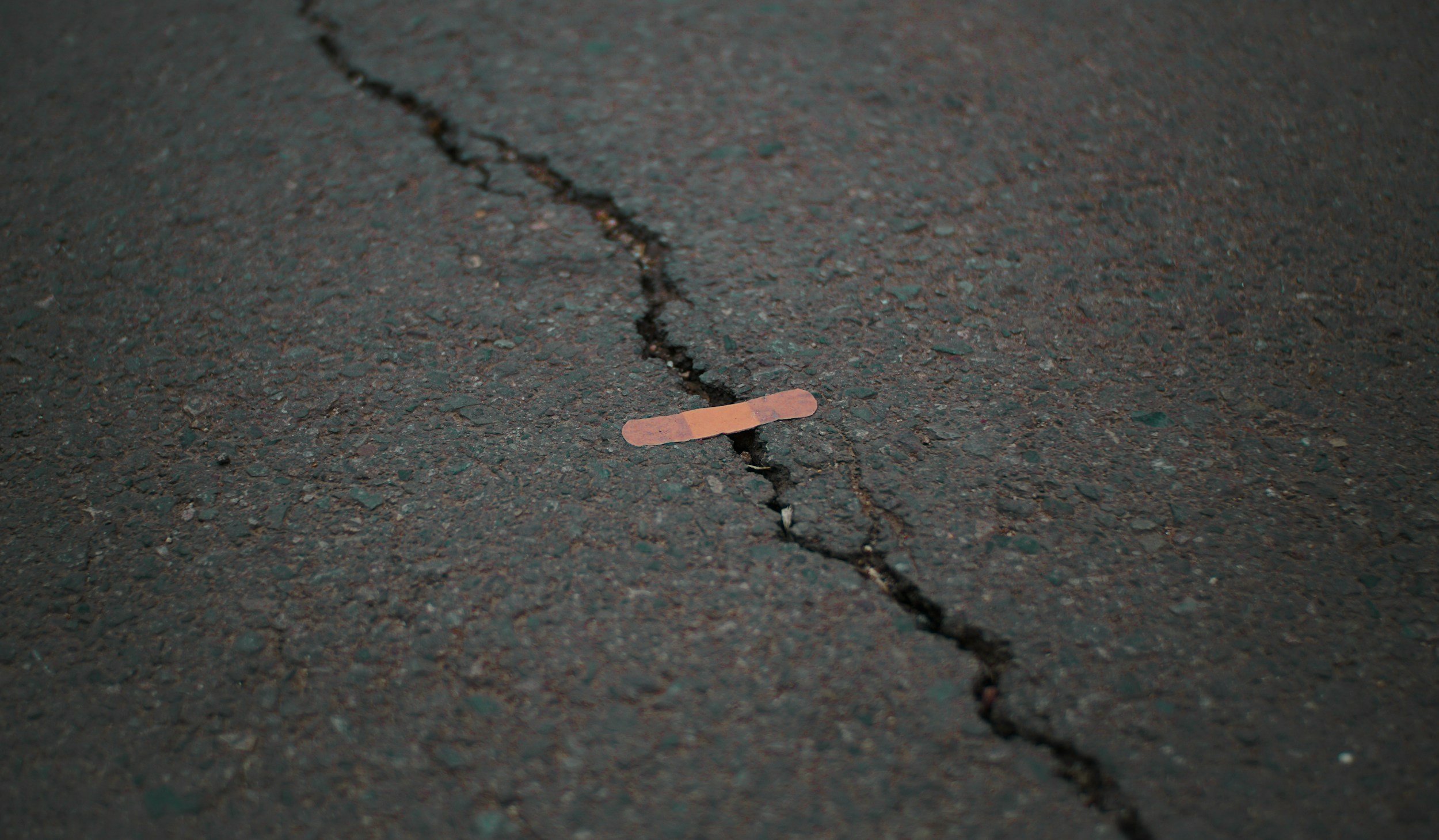
Healing a trauma bond isn’t about ripping the attachment out of yourself like a band aid.
It actually asks you to slowly, patiently, teach your system that:
Safety doesn’t have to come in spikes and ultimatums
Connection doesn’t have to be earned through pain or apology
Relief doesn’t have to be tied to someone else’s behavior
This is the part where things like steady routines, grounded relationships, creative expression, and body-based practices matter WAY more than most people realize.
These things give your mesolimbic system something new to light up for:
Not intensity, like before.
But meaning. Action that reflects your values.
A Different Kind of “Pull”
Over time, the goal isn’t to “feel nothing.”
It’s to start feeling better with, or drawn toward:
What feels steady (instead of dramatic)
What feels safe (instead of shocking)
What feels nourishing (instead of consuming)
That shift can’t happen overnight, because brain patterning takes time. A shift like this happens through repetition. It asks for small, lived experiences that show your body a new kind of reward that it can FEEL.
If You’re In This Right Now
If you’re in the middle of a trauma bond, and part of you feels ashamed that you still care, still miss, still want… I want to say this clearly:
There is nothing wrong with you.
Your nervous system learned a pathway to relief in a season where it needed something to hold onto.
That pull can continue even after you understand what happened, especially when part of you is still waiting for an explanation, apology, or resolution. I wrote more about that in Why Closure Feels So Hard After Narcissistic Abuse.
The work that I offer here isn’t rooted in judging that part of you.
It’s rooted in finding a path that you can walk, even gently, back home.
If this resonates, this is the kind of space I hold inside my work: not fixing you, not pushing you. Just helping you understand what your system has been trying to survive, and what it might need now, to feel safe enough to let go.
You don’t have to do this in a “hot and cold” world forever.
There are softer ways to live inside your own life, and you are allowed to find them.

How I Came to See This Differently
From the beginning, I’ve looked at trauma bonds as more than just psychology, even though the repeating themes are always there: beliefs, stories, attachment, self-worth. Yes, those pieces matter. Like.. a lot.
But in my work in porn and sex addiction recovery, I notice something else happening beneath the words my clients are using.
I sit with women who have done years of therapy. Often outpatient programs. Weekly support groups. Self-help books. Podcasts. All the “right” things. These women definitely aren’t uneducated about their situation.
They can explain their partner’s patterns, name their own triggers, map the cycle almost perfectly.
And still, their bodies stay in the same loop.
They share that they would leave a session or a conversation feeling clear, grounded, even strong… and then one text, one shift in tone, one moment of closeness or distance pulls them right back into that familiar spiral of hope, fear, relief, and ache.
So I ask a different question:
What if this isn’t just something you need to understand better… but something your nervous system has learned?
Seeing the Brain in the Bond
In my work, the mesolimbic pathway isn’t an abstract concept. It shows up as a missing puzzle piece in the room.
I see the same patterns I learned about in addiction work showing up in relationships built on inconsistency and emotional intensity.
This isn’t because these women are “addicted” to their partners, but because their systems have learned to associate this person with relief from pain.
That changes everything about how hard it is to walk away.
What I’ve Watched Happen in Real Time
I’ve watched clients who felt like nothing worked for them begin to soften when we stopped only talking about what they should do and started working with what their bodies were actually doing.
I’ve watched their faces light up when they learned how to create small, steady moments of safety that didn’t depend on their partner’s behavior.
I’ve heard their voices change in real time, when they found ways to feel grounded that didn’t come from waiting for a message, an apology, or a promise.
The shift isn’t always dramatic; a lot of times it’s gradual, something they notice looking back.
In real time, we would notice: maybe they stopped spiraling as hard during difficult moments. Or they paused before reaching out to frantically repair. They started to notice the craving without immediately obeying it.
And over time, they would say that the “pull” started losing some of its grip.
Why This Changes the Healing Conversation
When you look at trauma bonds through this lens, the question stops being:
Why can’t I just let go?
And starts becoming:
What has my body learned equals safety, and what would help it learn something new?
That shift alone can bring a lot of self-compassion into a place that’s often filled with self-judgment.
If You’ve Tried “Everything”
If you’ve read the books, listened to the podcasts, learned the terminology, and can explain exactly why the trauma bond exists, you might be wondering why knowing all of that still hasn’t made the pull disappear.
Understanding the pattern matters. But eventually, you need somewhere to practice responding differently when the pattern shows up in real life.
That might mean noticing the urge to reach out without immediately acting on it. Learning what you’re actually looking for in that moment. Finding other ways to meet the need underneath the pull. And slowly building enough trust in yourself that discomfort doesn’t automatically send you back toward what’s familiar.
You don’t have to stop wanting them before you can start choosing yourself.
Ready to Do Something With What You Know?
If you’re tired of understanding your patterns and still feeling stuck inside them, Journey to Self was built for this part.
It’s my 12-week coaching program for women who are ready to move from I know why I do this to actually responding to themselves differently. We work with self-awareness, self-compassion, self-trust, and the patterns that keep pulling you away from what you already know.
And if you’re looking for somewhere gentler to begin, you’re welcome at my free Women’s Circle every Tuesday at 7pm CT. Come listen, talk, reflect, or simply be around other women doing their own work too.
Either way, I’m glad you’re here, and I hope you find something here that feels steady. <3
-Ashana
Sources + Further Reading
Dutton, D. G., & Painter, S. L. (1993). Emotional attachments in abusive relationships: A test of traumatic bonding theory. Violence and Victims, 8(2), 105–120. PubMed record
Fiorillo, C. D., Tobler, P. N., & Schultz, W. (2003). Discrete coding of reward probability and uncertainty by dopamine neurons. Science, 299(5614), 1898–1902. PubMed record
Schultz, W., Dayan, P., & Montague, P. R. (1997). A neural substrate of prediction and reward. Science, 275(5306), 1593–1599. PubMed record